The Truth About Pondless Waterfall Basin Sizes and Pump Burnout
A backyard stream should run reliably without constant supervision. The crews at Rocky Mountain Waterscapes fix countless DIY projects that fail because the hidden water reservoir was built too small. A miscalculated pondless waterfall basin size forces the pump to suck air after just a few days of normal operation. This lack of water volume quickly destroys expensive equipment and turns a relaxing feature into a stressful liability.
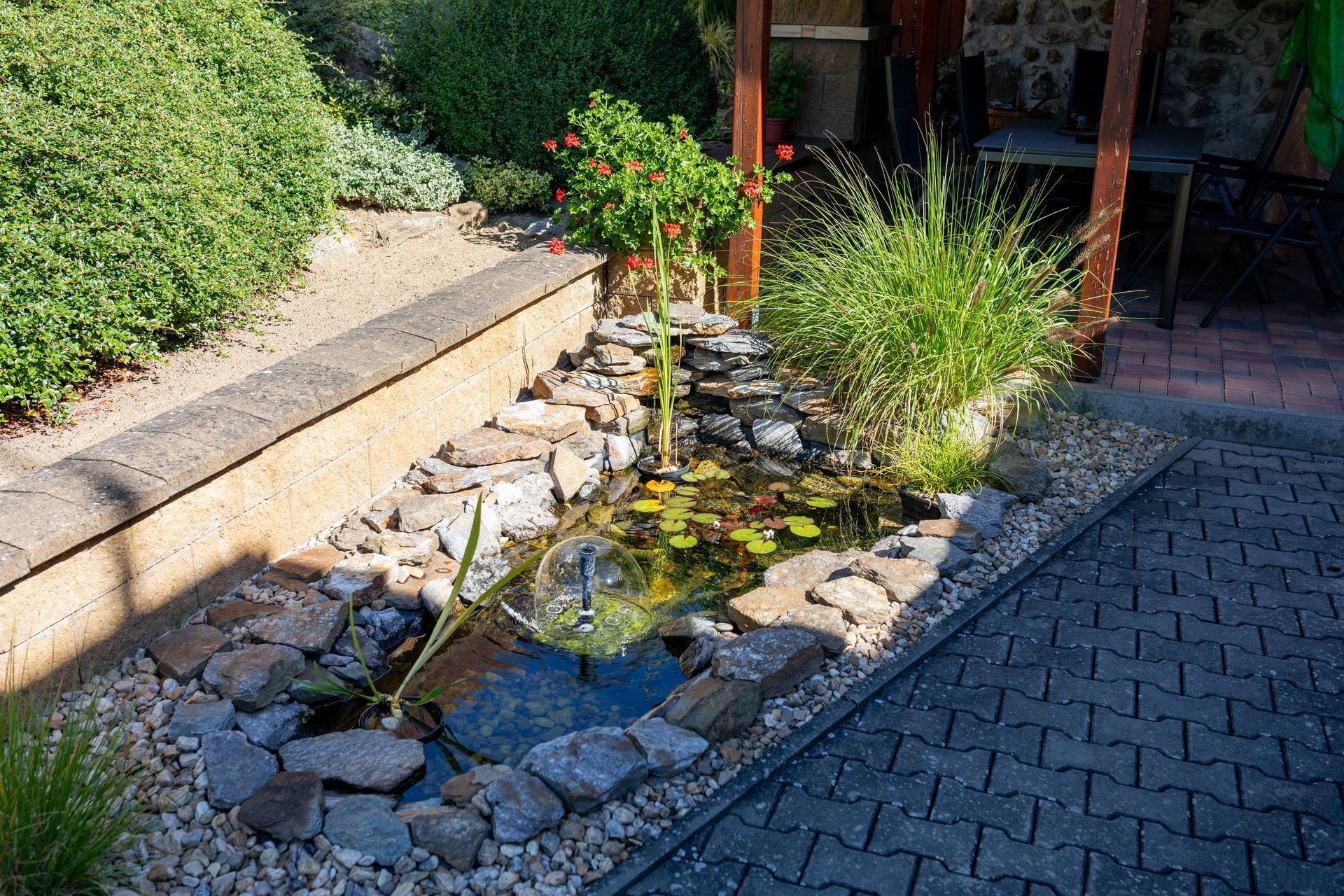
Most property owners underestimate how much water actually stays in motion over the rocks. The basin must hold enough water to fill the entire streambed while leaving the pump completely submerged. When tradesmen build these systems in Calgary, we engineer the reservoir to handle evaporation, splashing, and plant absorption. Getting the math right on day one prevents burnt motors and dry waterfalls.
Here is exactly what we will break down in this guide:
- The hidden volume rule: Where the water actually goes.
- Splash and evaporation: Daily water loss factors.
- The role of matrix blocks: Building a better reservoir.
- Sizing guidelines: Getting the dimensions right.
The Hidden Volume of Moving Water
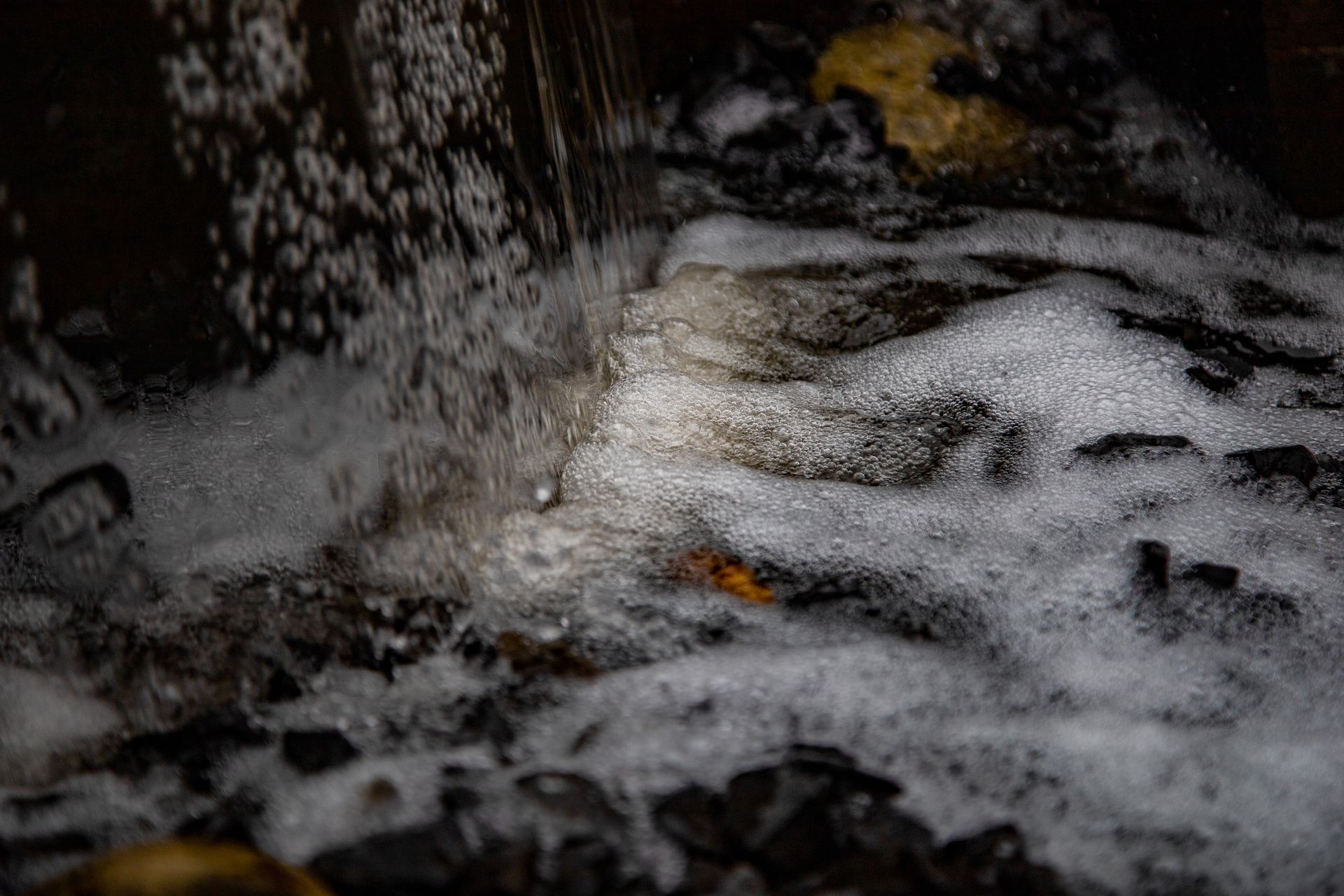
A common misconception is that the reservoir only needs to hold a few pails of water to keep the pump running. In reality, a large percentage of your water is constantly in transit over the rocks and gravel. When you turn the system on, the basin level drops immediately as water fills the upper plumbing lines and cascades down the streambed.
If the reservoir is too small, that initial startup sequence drains the basin completely before the first drop of water returns to the bottom. The pump then sucks in air, overheats, and burns out. A properly engineered system accounts for this transitional volume to ensure the pump stays deeply submerged at all times.
Factoring in Splash and Evaporation
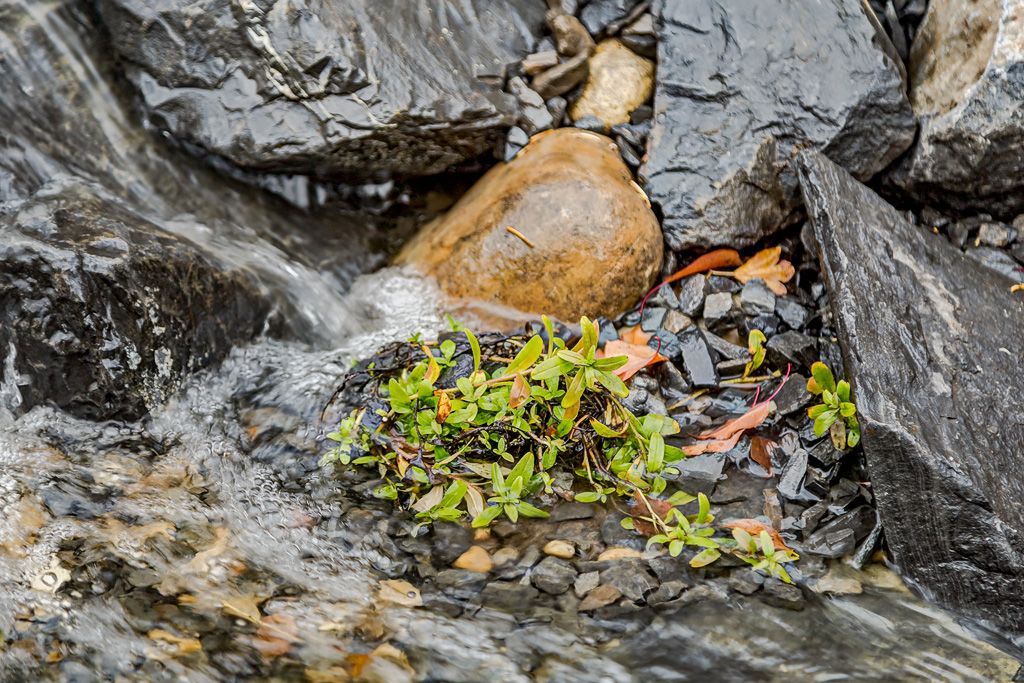
Water features naturally lose volume every single day. Water splashing against rocks creates tiny droplets that blow away in the breeze. Plants planted along the edges drink from the stream. The sun causes steady evaporation, especially during long dry spells in Alberta.
A larger basin acts as an insurance policy against these daily losses. If your reservoir barely holds enough water to operate the waterfall, you will be dragging a garden hose out to top it up every second day. A properly sized basin holds a buffer volume that allows the system to run for weeks without manual refilling. This makes water feature maintenance manageable instead of a daily chore.
The Role of Matrix Blocks in the Basin
Years ago, builders filled these reservoirs with heavy gravel to support the decorative rocks on top. The problem with gravel is that it takes up roughly seventy percent of the space inside the hole, leaving very little room for actual water. This is why older systems always ran dry and ruined pumps.
Today, we use structural matrix blocks instead of gravel. These engineered plastic crates resemble heavy duty milk crates and are designed to bear immense weight. Because they are hollow, they allow the basin to hold three times as much water in the exact same footprint. This modern approach to construction is the best way to maximize water volume without digging a massive crater in your yard.
Achieving the Right Pondless Waterfall Basin Size
Figuring out the exact dimensions requires looking at the length and width of your streambed to answer the core question of how big the basin needs to be. The general trade rule is that the basin must hold at least two and a half times the total amount of water in transit. To find the volume in transit, we calculate the surface area of the stream and factor in the depth of the water flowing over the rocks.
For a standard ten foot stream, you are usually looking at a basin that holds roughly one hundred to one hundred and fifty gallons of water. This means excavating a pit large enough to hold several matrix blocks and a pump vault. Going slightly larger than the minimum requirement is always the safest bet to protect the mechanical components.
Trying to save money by digging a smaller hole always costs more in the long run. When a pump runs dry, the internal seals melt and the motor fails permanently. Replacing a heavy duty pump is a significant expense that far outweighs the cost of digging a proper basin.
Getting the Engineering Right
Your backyard stream should provide peace of mind rather than a daily list of chores. Properly sizing the underground reservoir protects your hardware and keeps the water flowing reliably all season. Contact us today to book a site visit and get your structural engineering handled by the professionals.